


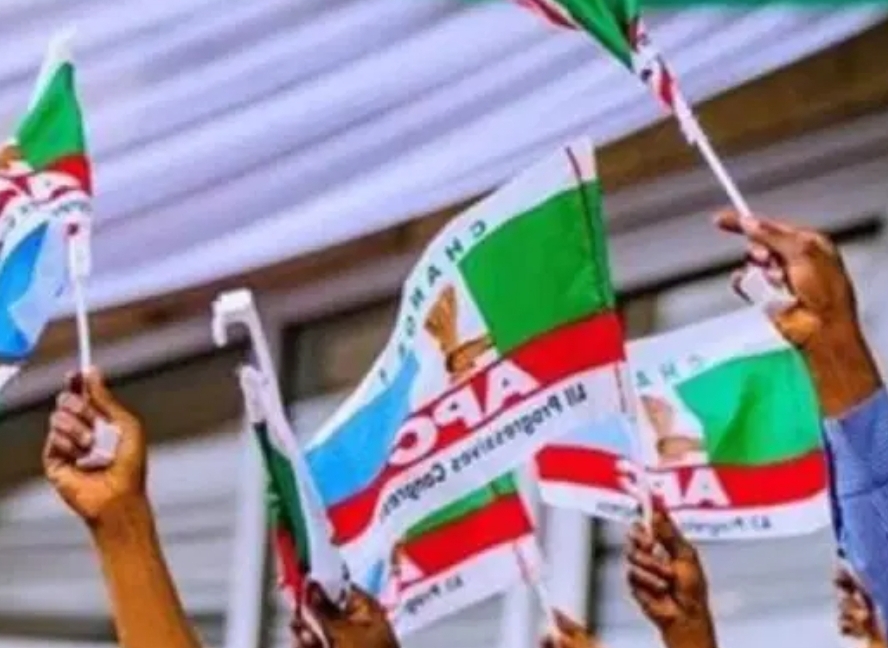
The National Rescue Movement (NRM) in Ogun State, under the leadership of Chairman Hon. Olujobi Fayoyin, has outrightly rejected the results of the August 16, 2025, by-election in Remo Federal Constituency, where the Independent National Electoral Commission (INEC) declared Adesola Elegbeji of the All Progressives Congress (APC) the winner with 41,237 votes, defeating the Peoples Democratic Party (PDP) candidate, Bola Oluwole, who polled 14,324 votes. Speaking to journalists in Abeokuta, Fayoyin described the election as a fundamentally flawed process marred by irregularities, accusing the ruling APC of manipulating the outcome to maintain its grip on power.
Fayoyin alleged that the APC employed tactics such as underage voting, electoral malpractices, and voter intimidation to secure victory. He accused INEC of complicity, claiming the electoral body facilitated the APC’s rigging efforts. “The election was a failed process of electing a political officeholder in Remo Federal Constituency,” Fayoyin stated, emphasizing that the by-election was characterized by widespread manipulation and violence at several polling units, which he believes contributed to a significantly low voter turnout.
The NRM chairman pointed to a pattern of electoral misconduct by the APC, referencing the recent local government election in Ogun State as another example of flawed democratic processes. “It is very unfortunate that the APC has turned every election in this state into an opportunity to rig and install their own people in power,” he said. According to Fayoyin, the by-election was even more problematic than the local government election, which he described as an “eye sore” for democracy in the state.
Fayoyin highlighted specific concerns about the integrity of the voting process, alleging that results were manipulated in favor of the APC in numerous polling units. He claimed that voter intimidation by the ruling party suppressed participation, further undermining the election’s credibility. “Despite the low turnout due to intimidation of voters by the ruling party, the election results were still manipulated in their favor,” he told reporters, calling the outcome a travesty of democratic principles.
While no direct evidence from available sources fully substantiates the NRM’s claims of underage voting or violence, a post on X reported that the Ogun State Police Command arrested two INEC officials and others in Iperu Remo during the by-election, with a large sum of money suspected to be intended for vote-buying. This development could lend some weight to allegations of electoral malpractice, though it does not directly confirm the specific irregularities cited by the NRM. Further investigation would be needed to verify these claims.
The PDP candidate, Bola Oluwole, echoed concerns about the electoral process, adding another layer of criticism to the by-election’s conduct. Oluwole publicly rejected a proposal by the APC candidate to amend laws to allow political parties to appoint replacements for vacant seats without holding elections, calling it an undemocratic move that undermines the will of the people. This aligns with the NRM’s broader narrative of the APC seeking to consolidate power through questionable means.
Fayoyin’s rejection of the by-election results is not an isolated grievance but part of a growing concern about electoral integrity in Nigeria. The NRM chairman called on Nigerians to protect the nation’s democracy by rejecting what he described as the “shenanigans of the APC and its cohorts” in Ogun State. He argued that the alleged manipulations in the Remo Federal Constituency by-election are indicative of a broader threat to democratic institutions in the state and beyond.
The by-election was necessitated by the vacancy in the Remo Federal Constituency, and its outcome has sparked significant controversy. The NRM’s accusations point to systemic issues in Nigeria’s electoral process, including the role of INEC, which has faced criticism in the past for its handling of elections. Fayoyin’s indictment of the electoral umpire as an enabler of rigging adds to the ongoing debate about the independence and impartiality of Nigeria’s electoral institutions.
In his call to action, Fayoyin urged “well-meaning Nigerians” to stand against the erosion of democratic values. He emphasized the need for collective action to hold political actors and institutions accountable, warning that unchecked manipulations could further destabilize public trust in the electoral system. The NRM’s rejection of the results signals their intent to challenge the outcome, though it remains unclear whether they will pursue legal or other formal avenues to contest the election.
As the controversy surrounding the Remo Federal Constituency by-election unfolds, it underscores the challenges facing Nigeria’s democracy, including allegations of electoral fraud, voter suppression, and institutional bias. While the NRM’s claims highlight serious concerns, the lack of detailed evidence in their statement and available sources limits the ability to fully validate their accusations. Nonetheless, the situation calls for a thorough investigation to ensure transparency and uphold the integrity of the democratic process in Ogun State.